Capital Mobility Without Losing Control: Hong Kong's Regulatory Dilemma

Input
Modified
Hong Kong now leads the world as the premier cross-border wealth hub.
Political imperatives limit full financial openness on the mainland.
Transparent, stable rules are key to sustaining Hong Kong’s advantage.

By the close of 2025, Hong Kong’s assets under custody for non-resident clients reached approximately USD2.95 trillion, overtaking Switzerland's USD2.94 trillion and making it the world's largest cross-border wealth management center, according to Boston Consulting Group. This milestone coincided with Beijing’s intensified regulatory measures against unauthorized brokers servicing mainland investors and the introduction of a 20 percent income tax on offshore trusts. The juxtaposition of these events highlights a core tension: while Hong Kong's financial development is propelled by Mainland wealth seeking cross-border avenues, a considerable portion of these funds originates from activities that Beijing deems threatening to its governance and fiscal oversight. Thus, China confronts a longstanding institutional dilemma—how to open its financial markets internationally without forfeiting the power to monitor, regulate, and control capital flows that may undermine political stability and fiscal integrity.
China Opened Trade Payments but Maintained Capital Controls
Trade-oriented economies commonly transition toward capital-account liberalization, influenced either by autonomous policy decisions or external pressures from trading partners. Historical examples include Japan’s gradual capital-opening in the early 1980s and South Korea’s post-1997 approach. The rationale is straightforward for participants in international commerce: exporters from hubs like Rotterdam or Chicago require assurance that payments for shipped goods will be reliably received, while importers need confidence that remittances to overseas suppliers will not face unexpected regulatory blocks or freezes at foreign exchange control bureaus. If a government imposes stringent restrictions on capital flows that impede these payments, the resulting regulatory uncertainty becomes a transaction cost that international counterparties are unwilling to absorb. Consequently, as trade volumes increase, so does the impetus for governments to ease capital controls to sustain seamless commercial exchanges.
China adopted a pragmatic institutional stance early in its economic opening. In December 1996, it committed to the International Monetary Fund’s Article VIII mandate, ensuring yuan convertibility strictly for current-account transactions such as trade-related payments, while deliberately retaining capital-account restrictions. This framework guarantees that exporters and importers can transact without foreign exchange barriers, yet limits the mobility of private capital. Individuals seeking to invest savings abroad—whether in foreign government bonds or real estate—face a restrictive annual quota, commonly around USD50,000 per person. This hybrid approach has persisted for nearly three decades, effectively balancing the demands of trade partners for reliable payment channels with the Chinese government’s desire to maintain monetary and financial stability by controlling cross-border investment flows.
The factors that once constrained capital outflows have diminished substantially. In 2025, outbound transfers by Chinese households, enterprises, and financial institutions reached an estimated USD807 billion, marking an all-time high according to the Institute of International Finance. Within this total, investments into foreign equities surged by 67 percent to USD208 billion, while acquisitions of foreign bonds rose 75 percent to USD153 billion. These flows comprised both officially sanctioned channels and substantial activity routed through insurance firms, trusts, and unlicensed intermediaries operating within legal ambiguities. Importantly, a comprehensive liberalization of China’s capital account would likely exert downward pressure on the yuan and foreign exchange reserves before benefits to foreign investors materialize, mirroring the experience from mid-2014 to early 2017 when foreign reserves declined by nearly USD1 trillion due to capital flight pressures.
The Political Challenge of Illicit Capital Mobility
China’s leadership confronts a distinct and politically sensitive concern beyond macroeconomic considerations: the flight of illicit capital. Wealth held abroad by politically connected individuals, corrupt officials, or businessmen engaged in illicit activities serves as an insurance policy against domestic investigations or political shifts. Such private capital mobility complicates regulatory oversight, as financial channels intended for legitimate diversification can facilitate money laundering and concealment of corruption proceeds, especially when sophisticated legal structures and intermediaries are involved. Advanced institutional mechanisms combined with tacit complicity or sophisticated concealment strategies have enabled corrupt actors to store wealth outside China. Chinese authorities' investigations have repeatedly traced illicit proceeds to offshore accounts, real estate, and corporations, underscoring the challenge of tracing beneficial ownership and enforcing accountability across jurisdictions.
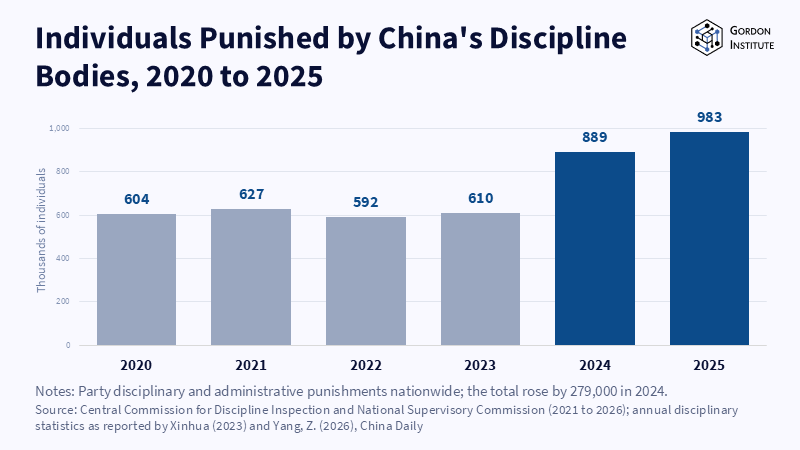
Since 2012, Xi Jinping’s administration has prioritized the suppression of illicit wealth accumulation as a core governance objective, a mandate that remains vigorously enforced. In 2025, the Central Commission for Discipline Inspection reported sanctions against approximately 983,000 individuals, up from 889,000 the prior year, alongside investigations into 115 high-ranking provincial or ministerial officials—an increase of 42 cases compared to 2024. Additionally, authorities initiated over 500 cross-border corruption investigations and successfully repatriated 963 fugitives through coordinated efforts such as the Sky Net 2025 campaign and comprehensive asset recovery operations. These extensive, institutionalized anti-corruption initiatives rely critically on the state’s capacity to monitor and trace financial flows across international boundaries. Hence, maintaining capital controls is essential for preserving effective cross-border financial oversight, enabling tax enforcement, and combating illicit financial activity. A fully liberalized capital account would curtail these regulatory capabilities, compelling Beijing to balance its commitment to political integrity with the demands of expanding financial openness. This trade-off explains why the Chinese leadership cannot concurrently guarantee foreign investors unrestricted market access and uncompromised fiscal and political control.
Hong Kong’s Role as a Controlled Financial Gateway
Since its 1997 handover from British to Chinese sovereignty, Hong Kong has operated under a unique institutional framework combining common law traditions, a freely convertible currency, and a sophisticated banking sector. These features have positioned the city both as an attractive venue for legitimate international investors seeking portfolio diversification and as a financial environment susceptible to use by individuals engaged in illicit wealth concealment. The case of Xiao Jianhua vividly illustrates this duality. In 2017, Chinese authorities extrajudicially transferred Xiao from his Hong Kong residence to the mainland, and in 2022 he was sentenced in Shanghai to 13 years’ imprisonment on bribery charges; concurrently, his conglomerate Tomorrow Holdings was fined approximately 55 billion yuan (circa USD8.1 billion), marking the largest penalty recorded in China to date. Judicial findings indicated that from 2001 to 2021, the group transferred assets including shares, real estate, and cash valued over 680 million yuan to state officials to evade regulatory scrutiny. This episode underscores the constrained financial autonomy Hong Kong exercises when confronted by Beijing’s imperative to safeguard national financial security, demonstrating the intersection of institutional design with political oversight in managing cross-border capital flows.
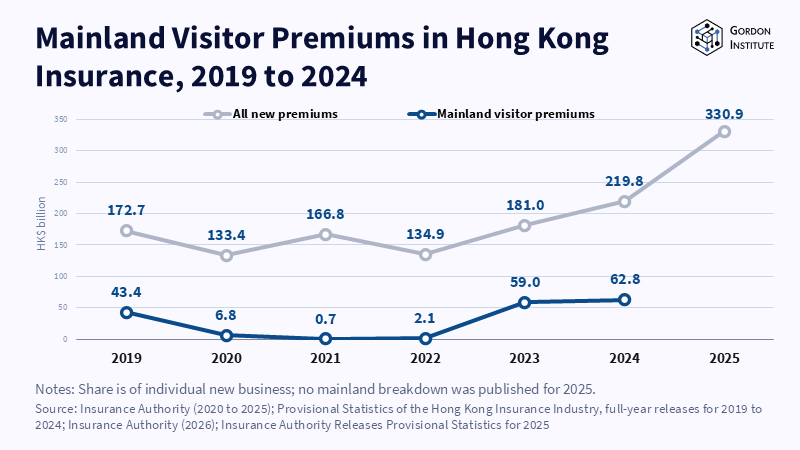
In 2024, a significant shift occurred in the regulatory environment governing cross-border financial flows between mainland China and Hong Kong. Following prolonged pandemic-related restrictions, authorities in both jurisdictions implemented targeted measures aimed at cautiously liberalizing capital mobility while preserving rigorous oversight frameworks. These measures included the relaxation of restrictions designed to reinvigorate legitimate mainland investor participation in Hong Kong’s wealth management sector, emphasizing structured programs that offer transparency and controlled access rather than open capital flight. A key institutional development was the February 26, 2024, upgrade to the Wealth Management Connect scheme, which tripled individual investment limits from one to three million yuan and expanded eligibility to include brokerage firms. This reform catalyzed a surge in mainland investor activity, with net purchases of Hong Kong-listed stocks reaching USD58.3 billion in July 2025—the highest monthly level since 2010. Simultaneously, life insurance premiums sold in Hong Kong rose by 50 percent to a record USD42 billion. These figures illustrate the role of institutional channels and existing foreign exchange quotas, such as the USD50,000 annual personal limit, as foundational elements facilitating the regulated movement of legitimate family wealth from the mainland to Hong Kong within monitored frameworks.
Parallel to the expansion of legal investment channels, illicit financial activities have also intensified. In December 2025, Hong Kong Customs and Excise successfully disrupted a laundering operation codenamed Mirage involving five individuals who exploited fictitious commercial invoices to move approximately HKD8.9 billion—an approach that fabricates export transactions to conceal prohibited capital transfers, bypassing standard banking scrutiny. Concurrently, prominent brokerage firms like Futu, Tiger Brokers, and Longbridge were found to have operated accounts for mainland Chinese residents without necessary regulatory approvals, a practice condemned by the China Securities Regulatory Commission as unauthorized. This regulatory challenge centers on the difficulty in differentiating between bona fide investors pursuing legitimate portfolio diversification and officials or entities concealing illicit wealth, as such distinctions are often opaque at the point of account initiation. This ambiguity has prompted decisive regulatory attention from Beijing, underscoring the institutional complexity in balancing openness with robust oversight.
The 2026 Regulatory Response and Its Regional Implications
In two decisive phases in 2026, Chinese authorities imposed sanctions on foreign and domestic financial intermediaries facilitating unlicensed services to mainland clients and introduced measures to confiscate illicit gains. Subsequently, the Ministry of Finance levied a 20 percent income tax on offshore trusts with a retroactive compliance mandate for declarations of assets transferred since 2023, signaling a formal commitment to taxing offshore wealth held by Chinese residents. This new tax regime on fiduciary structureshas prompted immediate retrenchment in wealth-management practices. Hong Kong banks restricted executive travel to the mainland, wealth managers curtailed client outreach in Greater China, and referral incentives for mainland-client introductions ceased. Industry estimates suggest that approximately USD2.6 billion of profits, constituting 10 to 20 percent of 2025 revenues linked to the mainland-Hong Kong nexus, face heightened risk due to these policies. At stake is a significant portion of the wealth-management sector's profitability derived from Chinese capital flows, underscoring the policy’s economic impact.
A prevalent concern regarding recent regulatory tightening is the potential for capital flight from Hong Kong to Singapore, which might undermine Beijing's oversight objectives while disadvantaging Hong Kong's financial sector without reciprocal benefit. However, current institutional and regulatory evidence suggests this risk is moderated. China's expanded tax provisions targeting offshore trusts apply uniformly to the income of Chinese residents irrespective of the jurisdiction in which their trusts are domiciled, thereby eliminating a differential tax incentive between trusts registered in Singapore and those in Hong Kong. Moreover, Singapore has independently escalated its regulatory scrutiny; following substantial law enforcement actions in August 2023 that uncovered laundering activities involving approximately S$3 billion linked to Chinese nationals associated with illicit gambling, Singapore has intensified due diligence requirements on fund sources and extended family office registration approval timelines, often exceeding one year. Institutional data reflect that, at the close of 2025, Hong Kong hosted approximately 3,384 single-family offices according to Deloitte, surpassing Singapore's reported figure of over 2,000, though variations in definitional criteria complicate direct comparison. These factors underscore that while Singapore remains an alternative financial center, it too faces institutional constraints that limit its capacity to absorb capital displaced solely by Chinese regulatory enforcement, thus contributing to a more complex inter-jurisdictional landscape of capital mobility and regulatory competition.
Singapore continues to serve as an alternative international wealth management hub, offering private investors diversification avenues beyond Hong Kong’s jurisdictional reach.Nonetheless, this alternative presents strategic challenges for Hong Kong. Local authorities have committed to accelerating account opening processes from over six weeks to under a month, facilitating faster access for global investors. Observers note emerging collaborations between Hong Kong firms and regional partners that may structure transactions to mitigate visibility to mainland Chinese regulators, presenting potential regulatory arbitrage avenues. Consequently, Hong Kong’s geographic and regulatory proximity to mainland China, traditionally a competitive advantage, is increasingly perceived by some market participants as a source of political and compliance risk.In June, Hong Kong’s Financial Secretary reaffirmed Beijing’s intent for the city to thrive as a global financial center, yet the actualization of this vision hinges critically on the transparency and consistency with which forthcoming regulatory reforms, scheduled for autumn implementation, are executed.
Toward a Framework of Controlled Openness and Regulatory Credibility
A foundational step for Hong Kong’s regulators is developing robust institutional capacity to differentiate legitimate wealth transfers from illicit capital flows. This entails comprehensive verification processes that go beyond document review to include substantive cross-validation of commercial invoices against genuine shipment records and a commitment to active information exchange with mainland tax authorities via established automatic mechanisms. The Hong Kong Monetary Authority’s announced enhancements to Wealth Management Connect, featuring increased investment ceilings, a broader array of financial products, and the potential extension beyond the Pearl River Delta, exemplify policies aimed at expanding transparent and regulatory-monitored channels. Concurrently, the city’s target to attract or grow over 220 family offices by 2028 indicates a strategic focus on fostering a controlled yet accessible environment for legitimate international investment. By progressively substituting opaque, informal pathways with approved, monitored conduits, Hong Kong can diminish opportunities for regulatory circumvention, thereby reinforcing the city’s regulatory integrity and long-term client trust.
The core challenge for Beijing centers on regulatory certainty rather than the fiscal cost of specific measures. As noted by economists at Natixis, Hong Kong’s financial sector faces the destabilizing impact of ambiguous enforcement policies governing cross-border capital movements. While asset managers can rationally incorporate a fixed 20 percent tax rate into their pricing models, they cannot readily accommodate unpredictable regulatory shifts implemented with little notice. To reconcile China’s anti-corruption objectives with the imperative to sustain foreign investor confidence, a clearly articulated, consistent regulatory framework is essential—one that transparently differentiates legitimate international wealth diversification from illicit transfers of corrupt proceeds. Existing institutional mechanisms, such as Stock Connect and Wealth Management Connect, function effectively as controlled, closed systems with defined boundaries, enabling state oversight and financial surveillance. Expanding these frameworks beyond the Pearl River Delta to include metropolitan centers like Shanghai and Beijing could institutionalize monitored legal outbound investment pathways, allowing capital flows to be managed without compromising political and fiscal control.
Hong Kong’s slender lead over Switzerland as the world’s foremost cross-border wealth management center—roughly USD10 billion in assets under custody, a figure close to the USD8.1 billion penalty levied against Tomorrow Holdings in 2022—underscores both its prominence and precarious position. The city’s continued dominance hinges on effectively accommodating substantial mainland wealth through transparent, well-regulated channels without allowing illicit capital flows to compromise financial integrity. Should money laundering risks persist and regulatory crackdowns become increasingly stringent without clear, consistent enforcement, investor confidence could erode, prompting a shift of capital and business activities back to alternative hubs such as Singapore. The imminent expiration of the 90-day compliance window for offshore trust tax declarations will provide critical empirical evidence regarding the effectiveness of current policies, revealing the balance between declared versus relocated assets and thereby charting Hong Kong’s future trajectory within the regional wealth management landscape.
The views expressed in this article are those of the author(s) and do not necessarily reflect the official position of Gordon Institute or its affiliates.
References
Al Jazeera (2022) ‘Chinese-Canadian billionaire Xiao sentenced to 13 years in prison’, Al Jazeera, 19 August.
Bloomberg (2025) ‘China’s capital outflows hit record amid liberalization push’, Bloomberg News, 18 August.
Boston Consulting Group (2026) ‘Hong Kong surpasses Switzerland as largest cross-border wealth hub’, press release, 27 May.
Burroughes, Tom (2026) ‘China’s offshore financial clampdown makes a mark’, WealthBriefing, 11 August.
China Daily (2026) ‘China’s anti-graft efforts deepen in 2025, with 115 senior officials probed’, China Daily, 19 January.
Chuang, Aileen (2025) ‘Wealth Connect 3.0: HKMA chief promises upgrades to boost appeal’, South China Morning Post, 26 March.
Customs and Excise Department (2025) ‘Hong Kong Customs detects money laundering case involving USD8.9 billion via fictitious trading activities’, press release, Hong Kong SAR Government, 23 December.
Insurance Authority (2026) ‘Insurance Authority releases provisional statistics for 2025’, press release, 24 April.
International Monetary Fund (1996) ‘People’s Republic of China accepts Article VIII obligations’, Press Release No. 96/58, 4 December.
Nguyen, Khac Phu (2026) ‘China expands outbound investment rules after USD807 billion left the country’, Yahoo Finance, 3 June.
Nikkei Asia (2026) ‘China crackdown rattles Hong Kong wealth hub status’, Nikkei Asia, October.
Park, Min-ju (2026) ‘Chinese wealth shifts from Singapore back to Hong Kong’, Seoul Economic Daily, 8 October.
Reuters (2026a) ‘Beijing’s investment clampdown clouds outlook for Hong Kong banks, insurers’, Reuters, 11 June.
Reuters (2026b) ‘China tax crackdown forces wealthy investors to assess their offshore trusts’, Reuters, 21 August.
Reuters Breakingviews (2026) ‘Hong Kong’s wealth hub faces a leaner future’, Reuters, 18 June.
The Asset (2024) ‘Enhanced Wealth Management Connect scheme raises investment limit, expands range of products’, The Asset, 26 February.
Yang, Zekun (2026) ‘China’s anti-graft authorities reveal extent of year’s work’, China Daily, 28 February.
Yuen, Vera (2026) ‘Beijing cracks down on Hong Kong’s hub of wealth’, East Asia Forum, 8 October.
Adapted from Beijing’s Dilemma Over Hong Kong’s Wealth Hub.
Similar Post
















