Scientific Autonomy in the AI Era: Keeping Research Within Reach

입력
수정
Dependence on external AI services can constrain scientific control
Autonomy requires usable infrastructure, continuity and independent evaluation
Research talent needs sustained access to tools and opportunities
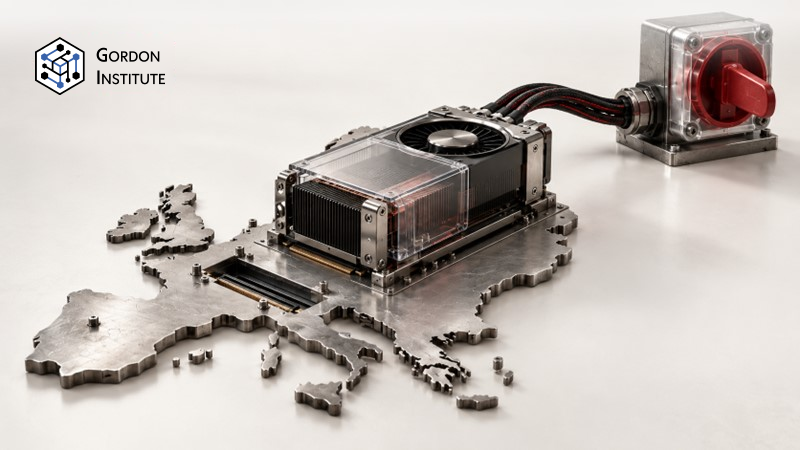
Scientific autonomy begins with the capacity to pursue a question and examine the answer without relying entirely on another organisation's continuing permission. In AI, that capacity depends increasingly on compute, models, data and technical expertise. Bruegel’s estimates place operational AI compute in the European Union at roughly two gigawatts in 2026, compared with 35 in the United States and five in China. The comparison describes an infrastructure imbalance rather than a ranking of scientific talent. Its significance is that some European research activities may depend on facilities and services controlled elsewhere. Collaboration across borders remains central to science, but collaboration and dependence are different relationships. Institutions need to understand which parts of their work can continue if prices, access conditions or service availability change, and which would be interrupted.
When Access Becomes a Scientific Constraint
The original article frames dependence through cybersecurity, where access to capable tools can affect an institution's ability to examine and respond to vulnerabilities. The same general question applies to scientific work: can a team inspect a system, reproduce an experiment and adapt its methods when circumstances change? Commercial services may provide powerful assistance while limiting access to model internals, retaining control over updates or restricting particular uses. Such conditions do not automatically make a service unsuitable. They do mean that researchers must distinguish a convenient interface from a research capability they can independently sustain. A model suitable for routine support may be inadequate for an experiment requiring stable behaviour and controlled access. The scientific cost of dependence emerges when those requirements cannot be met or when the work cannot move to another system without substantial loss. An institution might, for example, need to repeat an analysis after a model update or investigate a surprising result without sending sensitive material to an external service. These needs should be specified before procurement. Otherwise, the absence of control becomes visible only after a research programme has acquired dependencies that are difficult to change.
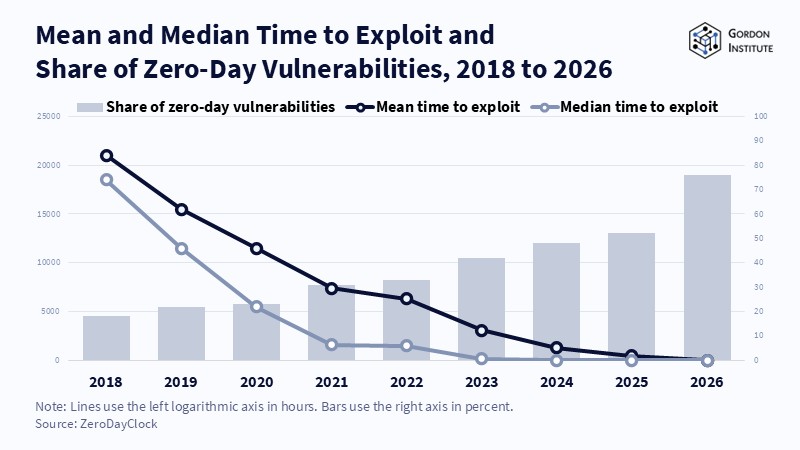
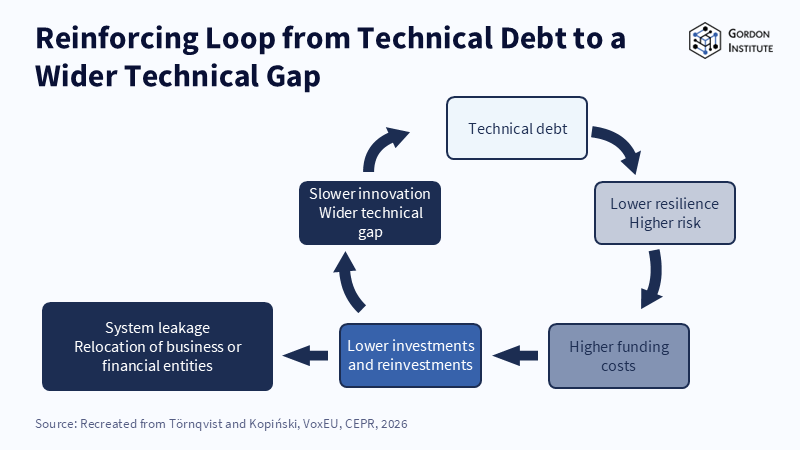
Dependence can also become self-reinforcing, although the effect is a possibility rather than an inevitable law. A team that builds its methods around one service may accumulate software and expertise specific to that environment. If switching becomes expensive, the institution has less flexibility to negotiate terms or adopt alternatives. In cybersecurity, delays and limited access can weaken response capacity; in research, they can interrupt experiments and make results harder to revisit. Smaller institutions may be especially exposed because they cannot maintain several technical environments. The response is not to reproduce every external service locally. It is to identify critical dependencies, preserve portable data and methods where possible, and maintain a credible route for the activities that must remain under institutional control. Autonomy has value when it protects the work, rather than merely changing the supplier's address.
Autonomy as the Capacity to Investigate
Europe's history of influential scientific institutions and technical standards helps explain the concern about AI dependence. The original analysis points to GSM and advanced semiconductor equipment as examples of European technological influence. These strengths show that a region can contribute decisively to a global system without controlling every component. AI should be assessed in the same spirit. Scientific autonomy need not mean winning every frontier-model competition. It can mean possessing the expertise to evaluate systems, adapt them to important domains and challenge conclusions that do not withstand evidence. Standards and regulation alone cannot provide that capability, but neither can infrastructure without a scientific community able to use it. The useful ambition is an active role in knowledge production, supported by enough control to pursue research priorities and maintain credible scrutiny of the tools involved.
The issue also extends far beyond Europe. Institutions in regions with less capital have long depended on externally supplied equipment, publishing systems and technical services. AI may amplify such inequalities if advanced experimentation becomes accessible only through a small number of platforms. A European response focused solely on replacing foreign providers with domestic ones could leave that broader problem unchanged. Scientific autonomy should therefore be compatible with wider access and international cooperation. Shared resources, clear allocation rules and transferable methods can help institutions contribute without becoming isolated. Open-weight models may offer greater experimental control in some cases, but still require compute, expertise and appropriate licences. Openness is an opportunity whose practical value depends on the resources users possess. The question is how to expand the number of institutions able to participate meaningfully in science. Cooperation can strengthen autonomy when partners have clear responsibilities and workable alternatives. A shared facility need not serve every request equally, but its criteria should be understandable and open to scrutiny. Smaller institutions also need realistic ways to enter the system. Without technical assistance and initial access, formally open resources may remain practically available only to teams already possessing substantial expertise.
The Cost of Usable Research Infrastructure
Infrastructure programmes make the costs of that ambition visible. The European Commission's InvestAI initiative was presented in 2025 with an ambition to mobilise €200 billion, including a fund for AI Gigafactories. The July 2026 call subsequently envisaged up to seven facilities, supported by up to €10 billion in public funding and at least €20 billion in private investment. These announcements describe planned resources and financing arrangements, not completed research capability. Bruegel's projection that the EU share of global AI compute would reach only about 5.6 percent in 2031 also shows why relative market share is a demanding target. The world outside Europe continues to expand. Scientific evaluation should ask what particular needs the new facilities serve: demanding experiments, independent model assessment, sensitive applications or accessible computing for smaller teams. A facility can have substantial research value even if it makes only a modest difference to Europe's global percentage.
The cost includes time, power and sustained operation as well as construction. The original article cites an uncertain comparison of approximately 24 months for US data-centre projects and 42 months in Germany, while identifying electricity and grid access as important constraints. For a research group, an infrastructure delay can outlast a grant or a doctoral project. Hardware also needs maintenance, software support and people who can help researchers design efficient experiments. Financing intended to establish autonomy should account for these recurring requirements. A system that is built but difficult to use may leave researchers dependent on the same external services. Conversely, improved access to existing facilities could address some needs sooner than a new construction programme. The appropriate choice depends on the scientific task, its time horizon and the degree of control required.
Turning Research Talent into Lasting Capability
Europe's existing research base provides a substantial foundation. The source analysis cites roughly 2.15 million researchers, €403 billion in research-and-development expenditure in 2024 and 2.2 million science and engineering graduates annually, drawing on INSEAD. These figures should not be read as a ready-made workforce for training frontier models; the skills and resources involved are specialised. They nevertheless challenge a simple explanation based on insufficient intellectual talent. The gap is partly organisational: researchers need environments where they can obtain data, conduct experiments, develop methods and pursue promising results beyond an initial demonstration. Commercial funding and model developers can contribute to that environment, but scientific capability also depends on universities, public laboratories and collaborative facilities. Their role is to sustain inquiry that may not fit the immediate priorities of the largest technology firms.
Retaining talent involves more than persuading graduates to stay within a region. It means providing credible opportunities to do consequential work. A researcher who can formulate a promising question but cannot obtain adequate computing time may have little reason to remain in an institution unable to support it. Yet locating every resource nearby is neither feasible nor necessary. Reliable partnerships, shared facilities and transparent access can also connect talent to tools. The institutional task is to avoid arrangements in which access is so fragile that scientific priorities are continually reshaped around someone else's commercial decisions. Support should include training in model evaluation, reproducibility and efficient experimentation, alongside computing allocations. The result sought is lasting capability: people who can judge their tools, develop alternatives and contribute knowledge that others can examine.
Scientific autonomy should be measured through what institutions can sustain and verify. Europe's projected compute expansion may improve access even while its global share changes little. A stronger test would ask whether research groups can complete demanding projects, preserve reproducible methods and continue critical work through changes in suppliers or funding. The answer will depend on choices about allocation, support and cooperation as much as on headline investment. For Gordon Institute's Science Forum, the wider purpose is to keep investigation within reach of more people and institutions. Autonomy becomes socially valuable when it protects independent inquiry and supports shared knowledge. The most useful infrastructure is therefore infrastructure that enables researchers to ask difficult questions, test the answers and retain enough control to do so again. Progress could be examined through concrete exercises: reproduce a published result using a retained environment, move a workflow between suitable systems, or complete an evaluation without depending on a single vendor’s interpretation. Such exercises would reveal weaknesses that aggregate capacity figures cannot. They would also help institutions decide where additional spending creates meaningful freedom and where international collaboration already provides a reliable solution.
This Science Forum article is adapted from material published within Gordon Institute’s network. It presents editorial analysis and does not constitute professional advice or an official institutional policy.
관련기사
















