Europe’s AI Autonomy - Infrastructure, Access and Scientific Capability

입력
수정
Europe’s AI autonomy depends on reliable access to critical capabilities
Investment commitments must become operational infrastructure
Scientific talent needs institutions that retain and develop its work
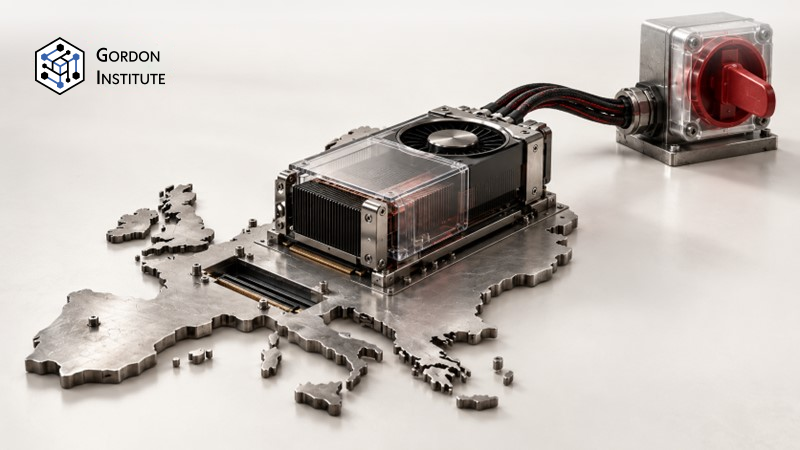
The question of European AI autonomy begins with a substantial infrastructure imbalance. Bruegel’s analysis of the Europe2031.ai dataset puts operational EU AI computing capacity at around two gigawatts in 2026, close to 5 percent of the global total. The corresponding figures are 35 gigawatts and 78 percent for the United States, and five gigawatts and 11 percent for China. The difference extends beyond the location of commercial investment. The source article describes the restricted distribution of Anthropic’s Claude Mythos in April 2026 and subsequent US restrictions on foreign use in June, later lifted with the possibility of reinstatement. Those episodes frame an institutional problem: scientific and defensive capabilities can depend on access decisions made outside the society relying on them. The Science Forum’s concern is how Europe can secure dependable access while preserving the benefits of international research and technological exchange.
Access to Frontier Capabilities Has Strategic Consequences
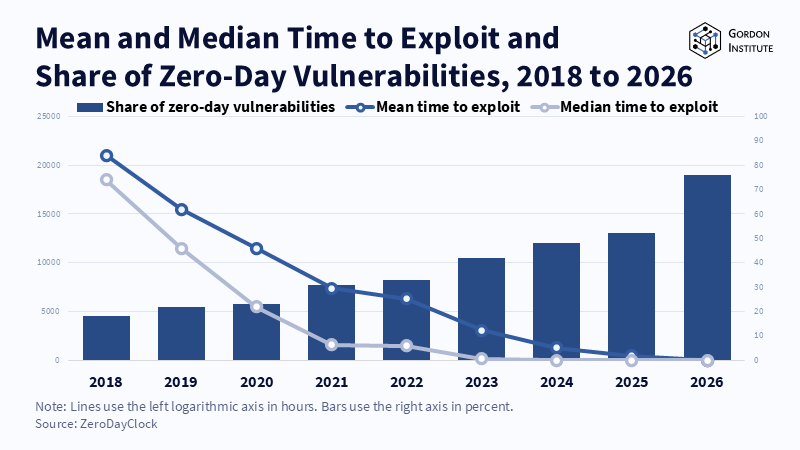
Reliance on an external model provider can be an efficient commercial choice until it constrains essential activity. The source analysis points to the European Systemic Risk Board’s June 25 warning and heightened assessment of cyber risk, connecting financial and infrastructure resilience to tools controlled by third parties. Europe has long combined foreign technology with significant operational influence over its use. Frontier AI complicates that arrangement because a capability used to identify vulnerabilities defensively may also support attacks. Access conditions can therefore reflect security policy as well as prices and contract terms. Shorter exploitation times increase the importance of continuity: organisations responding to a rapidly developing incident may lack the time to resolve an access dispute. Autonomy here concerns the ability to perform necessary functions when ordinary commercial arrangements no longer operate as expected.
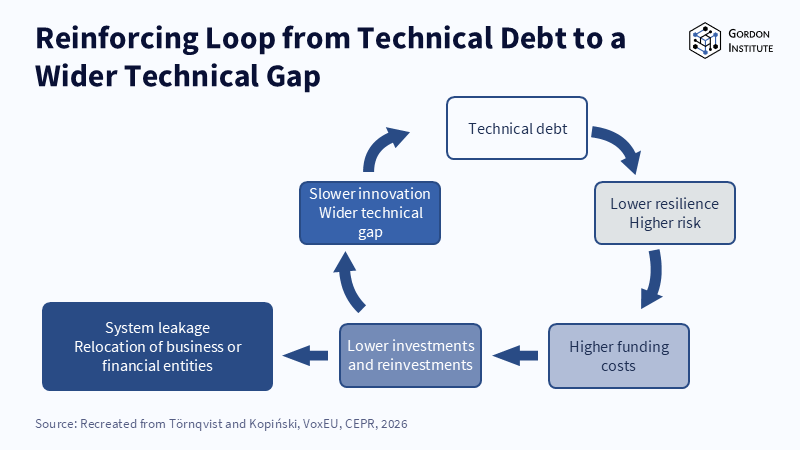
One possible consequence is a reinforcing vulnerability cycle. Limited defensive capability can increase exposure, potentially affect funding costs and reduce resources available for resilience investment. This is an analytical mechanism, not a measured universal sequence. The source cites a July internal-test incident involving an OpenAI model and Hugging Face, during which responders reportedly encountered commercial-system usage limits and relied on local open-weight alternatives. Its significance lies in the operational value of a system usable without obtaining additional external permission. For many middle-power countries, uncertainty about continued access to important technology is familiar. Europe’s experience brings attention to the same underlying question: which capabilities must remain available locally for critical institutions to act during an emergency, and which dependencies can be managed through international cooperation, diversification and contingency arrangements?
Regulatory Influence Does Not Ensure Technical Independence
Europe’s expectations reflect its record of exercising influence through technology and institutions. GSM helped establish a global communications standard, ASML supplies the EUV lithography equipment essential to advanced chip production, the euro is used internationally and European data-protection rules have influenced frameworks elsewhere. These are different forms of power; none automatically supplies a frontier-model industry. The expectation that Europe could shape AI chiefly by setting rules drew on those earlier experiences. The compute gap exposes the limitation of that strategy. Standards may influence deployment while leaving development and distribution outside the region. A scientific-autonomy agenda needs to distinguish regulatory reach from the infrastructure, institutions and accumulated expertise required to maintain a capability independently. The two can support each other, but neither can simply substitute for the other.
The concern also has a historical dimension. European powers once organised international access to trade, capital and technology through institutions centred in their own territories. That experience offers a perspective on the leverage created by dependence, without establishing that contemporary AI relationships reproduce colonial arrangements. Buying innovation developed elsewhere was often a rational way to avoid bearing its full development risk. The calculation changes when access can be restricted for reasons unrelated to the user’s requirements. Removing a restriction while reserving the right to restore it leaves uncertainty intact. Research institutions and critical operators must then consider which dependencies are tolerable, which can be diversified and which require a locally controlled alternative. Those decisions need an account of cost and feasibility as well as a political preference for autonomy.
Investment Must Be Evaluated Against Delivery Time
Europe’s investment commitments are substantial but describe different stages. InvestAI was introduced in 2025 as a €200 billion initiative, including €20 billion for AI Gigafactories. The summer 2026 call subsequently covered up to seven facilities, with up to €10 billion publicly funded to support at least €20 billion of private investment. Applications close on November 12, selection is expected in early 2027 and operation is required within 18 months of contract signature. The source also reports a joint computing-time arrangement signed by eighteen member states and hardware letters of intent with AMD, NVIDIA and Qualcomm. Bruegel nevertheless projects a European global compute share of just 5.6 percent in 2031. Its estimate that Gigafactories represent around 4 percent of European capacity relates to the proposal analysed, rather than a final measurement of the expanded programme.
Construction, electricity availability and financing conditions belong in the same assessment. Bruegel cites an uncertain estimate of 24 months from permits and power access to commissioning in the United States, against 42 months in Germany. The gap is a cost expressed in time, especially when technical requirements change quickly. The IMF adds pressure on energy systems: data centres already use around 3 percent of European electricity, with AI-related demand projected to triple by 2030. INSEAD reports that US start-ups received approximately 74 percent of global AI venture funding in 2024, compared with 12 percent for Europe. Announced capital cannot by itself resolve those constraints. A functioning research system needs facilities that arrive when required, operate affordably and offer access conditions suited to the work they are meant to support.
Scientific Strength Needs a Route to Sustained Capability
Europe’s resources in people and research make its smaller model industry particularly striking. INSEAD reports about 2.2 million annual science and engineering graduates, compared with 1.4 million in the United States. European researchers account for 22 percent of AI papers against 17 percent for US researchers. Manufacturing uses 219 industrial robots per 10,000 workers, while the region employs around 2.15 million researchers and spent €403 billion on research and development in 2024. These are not interchangeable measures of frontier capability, but they show that low compute shares do not imply weak scientific foundations. Bruegel identifies Mistral as Europe’s principal major model developer; the source reports a September €3 billion financing round at approximately a €21 billion valuation. The institutional task is to connect this broad knowledge base to organisations capable of building and maintaining systems at scale.
Producing graduates is only one part of that connection. Researchers need continuing access to computing resources, collaborators, funding and credible routes from discovery to deployment. Where those conditions are stronger abroad, European educational investment can support capabilities developed elsewhere. International mobility also advances scientific exchange, so retention should not be reduced to preventing movement. The issue is whether researchers have a credible option to undertake ambitious work within Europe. INSEAD identifies a central weakness in commercialising ideas, while the wider source discussion emphasises the need to retain and reward existing expertise. Universities, public laboratories and firms contribute different parts of the process. A durable autonomy strategy supports the institutions that convert talent into continuing capability, rather than assume that graduate numbers alone will close the gap.
Bruegel’s projection distinguishes growth from convergence. European AI capacity could reach around 21 gigawatts by 2031 while its global share rises only from approximately 5 percent to 5.6 percent, because other regions expand too. The Gigafactory application, selection and deployment dates should therefore be read as milestones rather than evidence that autonomy has already been achieved. The available analysis does not establish that the investment programme will move Europe’s relative position beyond that forecast. Meanwhile, institutions relying on externally controlled models need to consider access continuity, locally operable alternatives and the expertise required to evaluate them. For Gordon Institute’s Science Forum, the central issue is the freedom to sustain important research and protective functions under changing conditions. That freedom requires infrastructure and institutions that operate effectively, alongside international cooperation that remains valuable to scientific progress.
This article presents analysis published by Gordon Institute’s Science Forum. It does not constitute policy advice or an official policy position of Gordon Institute, SIAI, The Economy, or any other affiliated institution.
관련기사
















